Key Takeaways:
- Back-of-house storage inefficiency in retail directly impacts front-of-house customer experience when storage fails, and product availability fails with it.
- Retail and commercial storage design must balance operational efficiency with the space and aesthetic constraints that customer-facing environments impose.
- Purpose-built commercial storage solutions improve product flow from receiving to the floor, reduce labor time spent managing stock, and free up customer-facing square footage.
- McMurray Stern designs and installs storage systems for retail, grocery, and commercial environments across California, with solutions tailored to the specific requirements of each environment.
Introduction
In retail, the customer sees the floor. What they don't see is the back-of-house environment that determines whether the floor is stocked, organized, and performing the way it should. And in far too many retail and commercial operations, what happens behind the scenes is the biggest barrier to the customer experience in front of it.
Back stockrooms that overflow into the selling floor space. A product that can't be found quickly during restocking runs. Receiving areas are so disorganized that new shipments can't be efficiently processed. These are storage problems, and they show up in customer-facing outcomes: out-of-stocks, slow replenishment, and the frustration of finding an associate who can't quickly locate a specific size or SKU.
Storage design is one of the most impactful operational levers available to retail and commercial facility operators and one of the most consistently underinvested. Purpose-built commercial storage solutions address the specific constraints of retail environments: limited back-of-house space, diverse product categories, high replenishment frequency, and the need to keep both operational areas and customer-facing environments organized and functional.
The Back-of-House Problem and Its Front-of-House Consequences
Most retail back-of-house environments suffer from the same structural issue: they were designed (or more accurately, allocated) without systematic planning for how product would actually be received, stored, staged, and replenished to the floor. Shelving was added wherever space allowed. Overflow found its way to corners, under tables, and into spaces nominally designated for other purposes.
The operational consequences compound over time:
- Replenishment runs take longer because associates can't quickly locate the product they need in the stockroom
- Out-of-stocks occur not because the product isn't in the building, but because it can't be found or accessed efficiently during the selling period.
- Receiving processing slows as incoming product has nowhere systematic to go, creating a backlog that delays availability.
- Loss and shrinkage increase in disorganized storage environments where inventory accountability is difficult to maintain
- Selling floor space gets consumed by overflow inventory because the back-of-house cannot contain the product volume it's supposed to manage.
Each of these failures has a direct customer experience consequence, and each is addressable through systematic storage design.
Storage Solutions for Retail Back-of-House Environments
Effective retail back-of-house storage design starts with understanding the specific flow of product through the operation: how it arrives, how it's processed, how it's staged for replenishment, and how frequently it moves to the floor. Storage systems designed around this flow perform significantly better than those installed without considering it.
The storage solutions that most consistently improve retail back-of-house performance include:
- High-density mobile shelving for stockrooms: Mobile shelving systems that eliminate fixed aisles dramatically increase storage capacity within existing stockroom footprints, allowing more product to be stored in organized, accessible configurations without requiring additional square footage.
- Modular shelving systems for receiving and processing: Adjustable shelving configured for the specific size range and volume of the product categories being received allows receiving areas to be organized efficiently rather than managed chaotically.
- Categorized storage zones aligned with floor departments: Stockroom organization that mirrors the department structure of the selling floor reduces the time associates spend locating products. Every minute saved in the stockroom is a minute available for customer service.
- High-density storage for seasonal and promotional inventory: Seasonal and promotional product cycles create temporary storage demand spikes that disorganized stockrooms absorb poorly. Purpose-designed storage for these categories keeps them organized without disrupting primary stock organization.
Selling Floor Storage: Balancing Merchandising and Accessibility
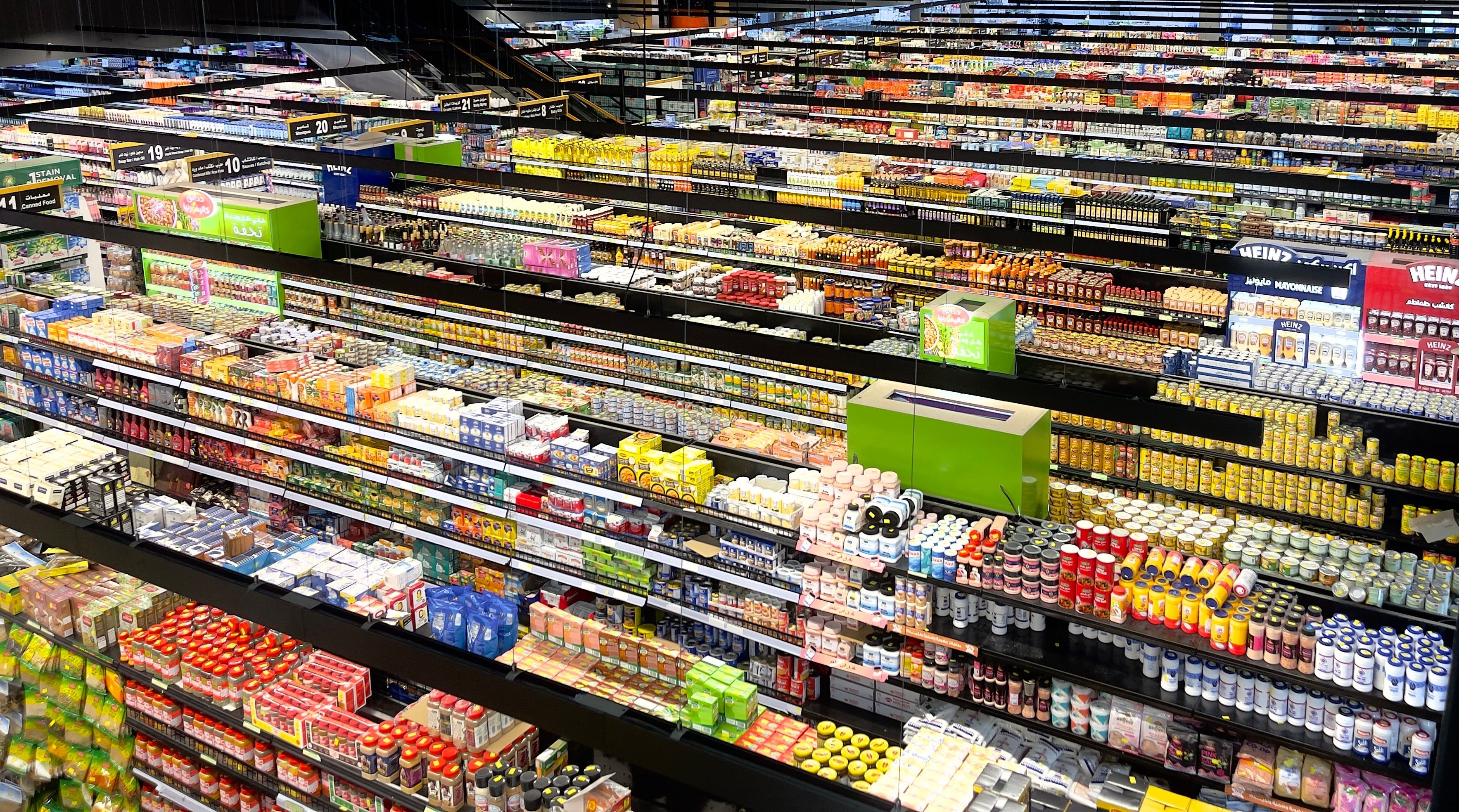
Commercial storage in retail environments isn't limited to the back of the house. Selling floor storage gondola shelving, wall shelving, end caps, and display systems is simultaneously a merchandising tool and a storage system. The challenge is designing it to perform well as both.
Gondola shelving and adjustable wall systems that allow category flexibility without full reconstruction enable retail operations to adapt to planogram changes, seasonal shifts, and assortment evolution without major capital expenditure. Systems designed with appropriate load capacity and configuration flexibility serve the operational requirements of a live retail environment better than decorative-first display solutions that prioritize aesthetics over function.
For grocery and food service retail, specialized storage solutions for perishable categories, including refrigerated shelving systems, specialty food storage, and produce display, require both the organizational capability of commercial storage and the food-safe construction that food retail demands.
Maximizing Retail Square Footage Through Storage Efficiency
In retail, square footage costs money, and every square foot consumed by disorganized or inefficient storage is a square foot unavailable for selling. Commercial storage design that maximizes back-of-house efficiency directly creates selling floor capacity, which is one of the highest-return square footage improvements available in retail real estate.
McMurray Stern works with retail and commercial facility operators across California to design storage systems that address both the operational requirements of the back of house and the space constraints of commercial environments where every square foot has a cost. Our team evaluates current storage configurations, product volumes, replenishment frequencies, and operational workflows before recommending systems that solve the right problems.
Contact McMurray Stern to learn how purpose-built commercial storage solutions can improve operational efficiency, product availability, and customer experience in your retail environment.